


Week 19, 2026
ℱ𝓇𝓸𝓂 𝓂𝓎 𝒽𝑒𝒶𝓇𝓉 𝓉𝓸 𝓎𝓸𝓊𝓇𝓈... 🫶💌☕
🗓️ Welcome, May.
There’s a softness in the sky today that comes after fullness.
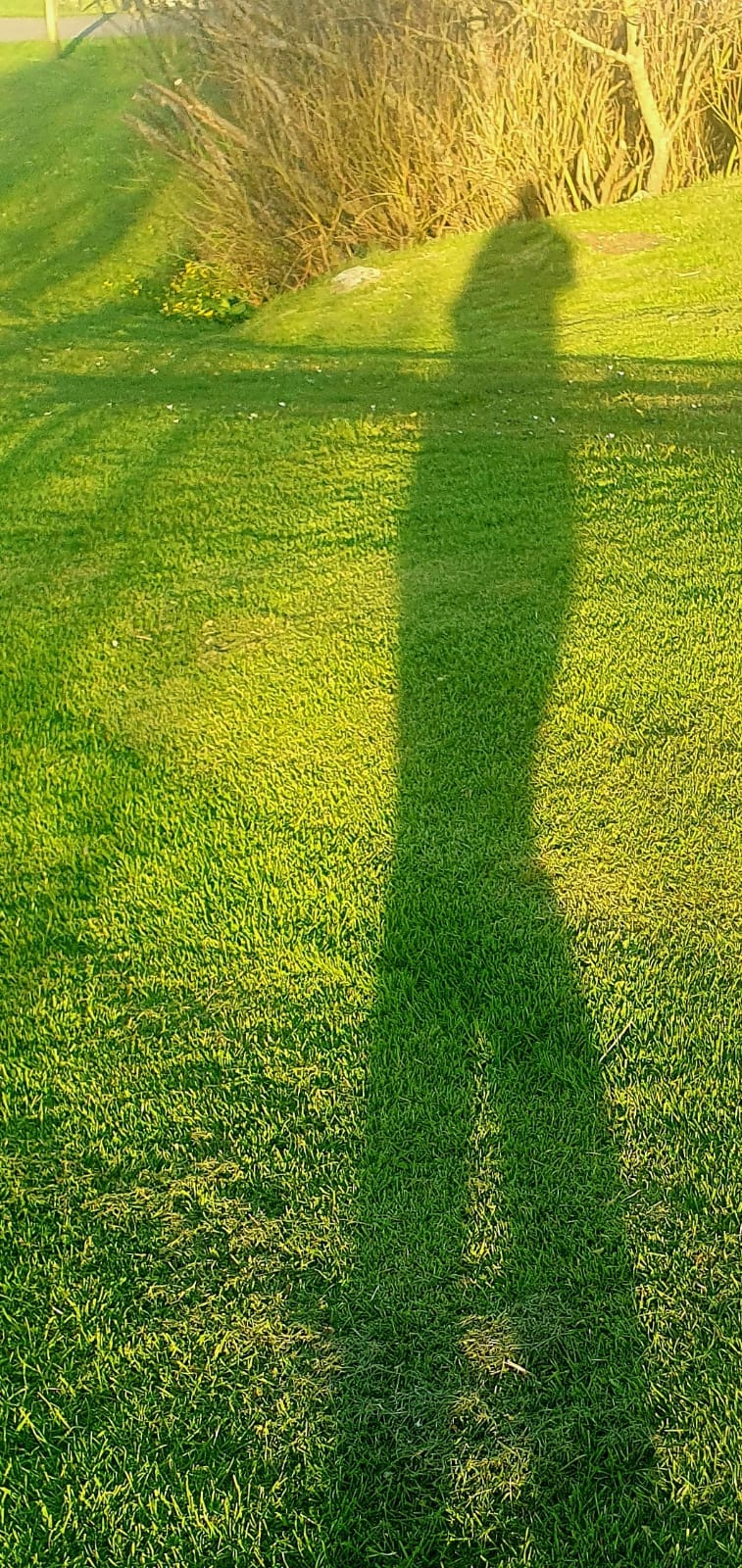
Here in Shetland, at 60° North, spring never arrives all at once. It seeps in through the cold wind, salt air, and long stretches of light that don’t feel certain yet. Everything stays in motion: sea, sky, and land… each reshaping what it means to find ground.
Something wider feels open beneath it. Perspective, maybe. Meaning doesn’t need to be grasped to be felt. It can unfold at the edges while you’re still learning how to stay with yourself.
This is the kind of weather where the body understands grounding through contact instead of stillness. Feet on floor. Breath in ribs. Wind on skin. The ordinary doing the work of bringing you back.
When the storm feels inside you, the world doesn’t ask for resolution. Only attention. A return through the senses, one small point of contact at a time, and in the background… something is taking shape.
I’d like to also take a moment to mention that what began shifting through my offerings in April is now settling into clearer form.
The Grounding Guide will always remain free. A steady space for embodied nervous system insights and short somatic snacks that you can return to whenever you need.
The Somatic Lab is currently being redeveloped as a weekly, self-paced container that sits between the 2-minute tools and my six-month neuro-myo-fascia repatterning immersive. I’m shaping it as a space for those of you who feel ready to go a little deeper with practice, but without the commitment of a longer and more intensive container.
Each week, I’ll offer a guided body-based (experiential) intervention to move through in your own time.
Alongside this, I’ll open space for shared themes and requests, which may be developed into group tutorials so the learning is held collectively.
There’s no pressure to keep up or do everything at once. I’m holding it as a steady rhythm of regulation you can return to, in your own way.
An in-between space to go a little deeper, without overwhelm.
When the Storm Feels Inside You
When your nervous system becomes dysregulated, the brain may signal danger even when you’re safe. This can lead to a surge of stress responses in the body. Gently bringing attention to your senses can support the parasympathetic system, helping your body recognise safety and begin to settle. Even brief moments of sensory awareness can support regulation over time.
Sometimes it can feel like a storm is held within you. Thoughts, sensations, and emotions can rise all at once, making it difficult to feel steady or know where to turn.
Through my own experience, and in supporting others, I’ve come to understand that you don’t always need to begin with what’s happening internally. You can start by noticing what’s around you, allowing the external world to support you in finding your ground.
1. Your senses, as anchors, can guide you back to safety.
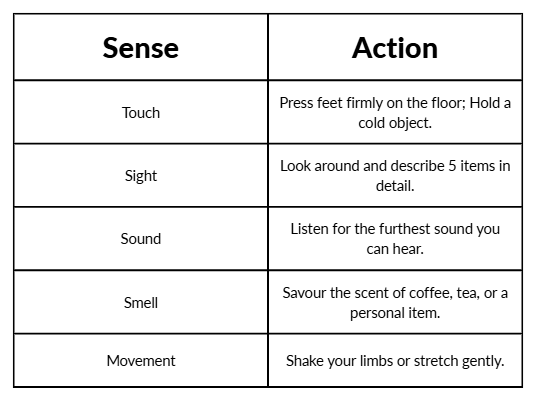
Your senses offer simple ways to reconnect with the present moment. When things feel intense, noticing what’s around you can gently shift your experience, helping your body orient to the here and now.
Sight: light, colour, shapes, or textures in your space
Sound: a steady background noise, or the rhythm of your breath
Touch: fabric against your skin, a surface beneath your hands, or the contact of your body where you are sitting
Smell or taste: a familiar scent, fresh air, or a warm drink
There’s no right or wrong way to do this. Nothing needs to change. Simply noticing, as always, is enough.
What can you notice
around yourself
right now?
2. Shifting your attention without judgement
This isn’t about removing discomfort or forcing yourself to feel calm.
It’s a way to pause and give your body a different point of focus.
What happens if you give yourself
attention
for a moment?
3. Softening into sensation
If you can, imagine touching something soft, and noticing how it grounds you.
What does softness feel like
in your body?
You might rest your hands on something soft, or on your own arms, and notice the sensation beneath your fingertips. Let your attention stay there, even briefly.
I am here.
I can notice.
Even a small shift in attention can begin to influence how your body responds.
🧘 2-Minute Somatic Snack: Sensory Grounding Pause (begins at 3:20).
A short practice to support steadiness through your senses, to see what feels most accessible to you right now.
1. Check-in (10 seconds)
Notice your body as it is.
2. Look and listen (40 seconds)
Let your eyes settle on something nearby, and notice its shape or colour.
Bring attention to a sound in your environment that feels neutral or steady.
3. Touch and breathe (40 seconds)
Place your hands on a surface, your clothing, or your body.
Feel the contact.
Take a slow breath in, then a slightly longer breath out.
4. Smell or taste (30 seconds)
Notice a scent or a small taste, if available.
5. Notice the shift (30 seconds)
Take one more slow breath.
→ What feels different, even slightly?
Please note that these timings are given as example, and you can spend more or less time on each part as you personally need to. If time is limited, I invite you to simply choose one sense and stay with it.
For the month ahead, where can you pause, just for a moment in your day?
You might explore this in small ways:
While making a drink, notice warmth or scent.
When stepping outside, take in light or air.
During a busy moment, place your hands on a surface and feel the contact.
No need to add anything extra to your day.
A few seconds is enough.
Until next time,
take care.
𝒲𝒾𝓉𝒽 𝒢𝓇𝒶𝓉𝒾𝓉𝓊𝒹𝑒,
🙏 𝒟𝒶𝓃𝒶 𝓍𝑜
P.S. If you’d like to explore this theme a little further, you might find these helpful:
🧘♀️ Related guided somatic practices
Gently Feeling: Learning to Regulate Your Emotions — recognising and holding over- and under-arousal with safety and compassion
Gentle Anchors: Finding Safety in Your Body — a somatic meditation to notice, soften, and reconnect
Sensing Your Space — short somatic meditation for grounding in your body, reclaiming presence, and noticing your boundaries
Feet on the Floor — micro-practice to reconnect with your body, reclaim space, and anchor your nervous system
Listening, Breathing, and Returning — honouring your body’s whispered messages
📚 If you’d like to explore the theme more deeply
Core Concepts (why grounding works):
Gentle practices (to anchor your nervous system)
Understanding your inner experience (the inner storm)
Dissociation/Shutdown: Sometimes, when the storm is too high, the body shifts into freeze mode (one of many trauma responses from the 9 F’s: fight, flight, freeze, fawn, flop, fright, flag, faint, and friend) making you feel numb, disconnected, or as if things are not real. Grounding works slowly here, gently waking up the senses.
Avoidance vs. Grounding: Grounding isn’t about avoiding uncomfortable emotions. It’s about becoming stable enough to feel them without being overwhelmed by them.
Personalisation: Not every technique works for everyone. It’s important to treat these practices like a menu and find 2-3 that feel best for your system.
🔍 Key search terms (if you’re curious to explore further)
Sensory Grounding
Window of Tolerance
Over-arousal / Under-arousal
Somatic Tracking
Environmental Anchors
Nervous System Regulation


